In high-performance material engineering, fabric selection directly determines safety, durability, and long-term cost efficiency. Among modern technical textiles, Sovetl aramid mesh has become a widely recognized solution for demanding industrial environments. But how does it compare with other industrial fabrics, and what makes it stand out as a high strength aramid mesh solution?
This article breaks down the key differences to help you understand where aramid mesh fabric truly excels.
1️⃣ What Is Aramid Mesh?
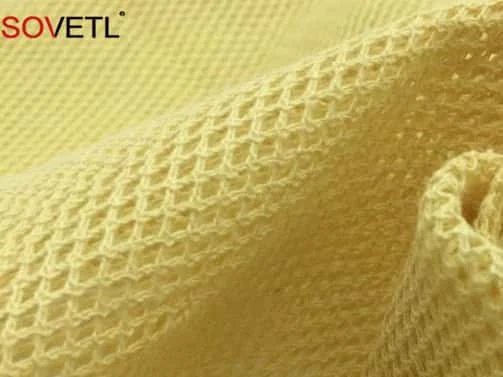
Aramid mesh is a technical textile made from aramid fibers, known for their exceptional heat resistance and mechanical strength. Its open mesh structure provides breathability while maintaining structural integrity.
Key characteristics of aramid mesh textile include:
- High tensile strength
- Excellent heat and flame resistance
- Low flammability and self-extinguishing properties
- Strong dimensional stability
- Lightweight yet durable structure
Sovetl develops aramid fiber mesh with controlled weaving precision to ensure consistent performance across industrial applications.

2️⃣ Aramid Mesh vs Polyester Mesh
Polyester mesh is commonly used in low-cost industrial applications, but it has clear limitations compared to aramid mesh fabric.
| Feature | Aramid Mesh | Polyester Mesh |
|---|---|---|
| Heat Resistance | Excellent | Low |
| Strength | High strength aramid mesh | Medium |
| Flame Resistance | Self-extinguishing | Melts easily |
| Industrial Use | Heavy-duty environments | Light-duty applications |
Conclusion: Aramid mesh clearly outperforms polyester in high-temperature and safety-critical environments.
3️⃣ Aramid Mesh vs Nylon Mesh
Nylon mesh offers flexibility and abrasion resistance, but it cannot match the thermal stability of aramid-based materials.
- Nylon softens under heat
- Aramid mesh maintains structure at high temperatures
- Nylon degrades faster in chemical and industrial exposure
For industries requiring reliability under extreme conditions, aramid mesh textile is a significantly stronger choice.

4️⃣ Aramid Mesh vs Metal Mesh
Metal mesh is strong but comes with drawbacks such as weight and corrosion risk.
- Metal mesh: heavy, rigid, prone to corrosion
- Aramid mesh: lightweight, corrosion-free, flexible
Sovetl’s aramid fiber mesh provides a balance of strength and usability that metal cannot achieve in many modern applications like filtration and protective systems.
5️⃣ Why High Strength Aramid Mesh Stands Out
The biggest advantage of high strength aramid mesh lies in its combination of:
- Structural strength comparable to some metals
- Extremely low weight for easier handling
- High resistance to heat, flame, and mechanical stress
- Long service life under harsh conditions
This makes it suitable for aerospace, automotive reinforcement, industrial filtration, and protective equipment.
6️⃣ Industrial Applications of Sovetl Aramid Mesh
Sovetl engineers aramid mesh fabric for demanding environments such as:
- High-temperature filtration systems
- Automotive and aerospace reinforcement layers
- Industrial safety protection components
- Heat-resistant shielding materials
- Composite material reinforcement
Its performance consistency ensures stable operation even under continuous stress conditions.
✅ Conclusion
When comparing industrial textiles, aramid mesh textile clearly delivers a superior balance of strength, heat resistance, and durability. Compared to polyester, nylon, and even metal mesh, Sovetl’s aramid fiber mesh stands out as a reliable solution for high-performance industrial use. For manufacturers seeking long-term stability and safety, high strength aramid mesh remains one of the most dependable material choices available today.