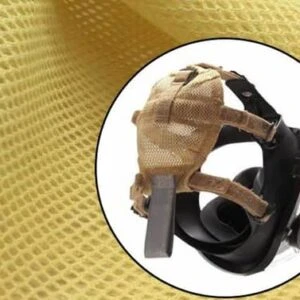
In many industries, from outdoor gear to furniture manufacturing, the choice of webbing material can significantly affect the performance, durability, and flexibility of products.Sovetl, a leading manufacturer in high-quality webbing solutions, provides professional guidance on selecting the right material for your needs.
In this article, we will explore the key differences between elastic cord webbing and standard webbing, their applications, and how to make an informed choice.
1. Understanding the Materials 🔍
Elastic Cord Webbing
Elastic cord webbing is made with stretchable fibers integrated into a durable fabric base. This type of webbing combines strength and flexibility, making it ideal for applications requiring adjustable tension.
Key Features:
-
High elasticity with controlled stretch
-
Comfortable and lightweight
-
Durable under repeated tension and movement
Standard Webbing
Standard webbing, typically made from nylon or polyester, offers strength and rigidity but lacks significant stretch. It is suitable for fixed applications where flexibility is not required.
Key Features:
-
High tensile strength
-
Low elasticity
-
Suitable for structural support and load-bearing
2. Comparing Elastic Cord Webbing and Standard Webbing ⚖️
| Feature | Elastic Cord Webbing | Standard Webbing |
|---|---|---|
| Flexibility | High stretches | Low – minimal stretch |
| Comfort | Soft and adaptable | Stiff and rigid |
| Applications | Adjustable straps, sports equipment, outdoor gear | Backpacks, seat belts, safety harnesses |
| Durability under tension | Excellent | Excellent |
| Ease of Installation | Easy to adjust and fit | Requires precise measurements |
The table highlights the main differences, showing that elastic webbing straps provide adaptability and comfort, while standard webbing excels in static strength applications.

3. Advantages of Elastic Cord Webbing 🌟
-
Adaptability – Elastic webbing stretches and adapts to movement, reducing strain on fasteners and anchor points.
-
Comfort – The soft, stretchable material is ideal for wearable applications such as backpack straps or fitness bands.
-
Versatility – Elastic cord webbing can be used in sports gear, luggage, medical equipment, and more.
-
Durability – Sovetl’s elastic webbing is engineered to withstand repeated stretching without losing shape or strength.
4. Key Applications of Elastic Webbing Straps 🏞️
Elastic webbing straps are widely used across multiple industries due to their flexibility and strength. Some notable applications include:
-
Outdoor Gear – Tent straps, bungee cords, sleeping bag attachments
-
Sports Equipment – Resistance bands, protective gear straps, fitness accessories
-
Medical & Rehabilitation – Adjustable support straps for braces and therapy devices
-
Luggage and Travel Accessories – Elastic straps for securing bags and accessories

5. How to Choose the Right Webbing Material ✅
Selecting the right webbing depends on the intended use, load requirements, and desired flexibility. Sovetl recommends considering the following factors:
-
Stretch Requirement – If the application requires movement, choose elastic webbing or elastic cord webbing.
-
Load-Bearing Needs – For high-strength applications, standard webbing may be more appropriate.
-
Environmental Conditions – Both elastic and standard webbings should be UV and water-resistant for outdoor use.
-
Comfort & Ergonomics – Wearable straps or adjustable fittings benefit from elastic properties.
By carefully evaluating these factors, you can select the webbing type that balances strength, comfort, and functionality.
6. Sovetl’s Expertise in Elastic Webbing 🌐
Sovetl has been a trusted manufacturer of elastic cord webbing, elastic webbing, and elastic webbing straps for years. Their products are designed to meet strict industry standards, providing:
-
Consistent quality for both small-scale and bulk applications
-
Customizable dimensions and stretch ratios for specific project needs
-
Durable materials that withstand repeated use in demanding conditions
Working with a professional supplier like Sovetl ensures reliable performance, whether for industrial, commercial, or personal projects.
7. Conclusion 🌟
Choosing between elastic cord webbing and standard webbing requires understanding your project’s needs.
-
For applications requiring flexibility, comfort, and adaptability, elastic webbing straps are the optimal choice.
-
For rigid, load-bearing, or structural applications, standard webbing provides unmatched strength.
By selecting the right material, you can enhance product performance, user comfort, and longevity. Sovetl’s elastic cord webbing and elastic webbing straps offer professional-grade solutions suitable for a wide range of industries, ensuring that your projects meet both functional and safety standards.